Bernard — Entertainment, Occupation and Oil
Second part of my grandfather's story

If you missed the first part of my grandfather’s story, here it is: Bernard – the Oil Man
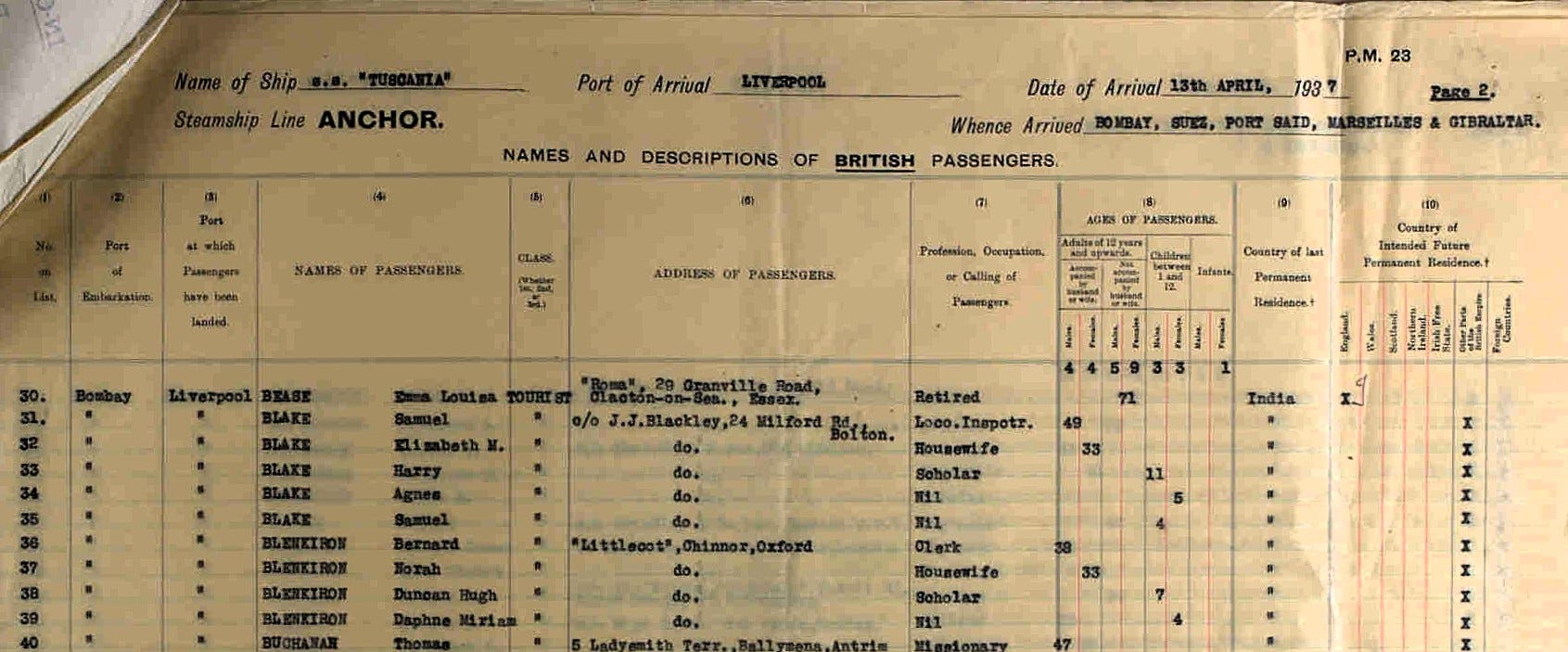
We left Bernard and his young family on the ship back to England after 17 years in British India. The family’s third child, Sylvia, was born on 26 Jul 1937 in Portsmouth1. There is no indication of what he did there, other than one newspaper clipping that reported a Blenkiron playing cricket for the Hayling Island Cricket Club2, a sport he loved. By 1938, the phone book puts him in Higham at the “Halfway Filling Station”, Lancaster House, on the London Road3. The family stayed in Higham until Bernard was posted with the Army to Northern Ireland where they lived in a nice 4-bedroomed semi-detached house at 52 Harberton Park, Belfast4.
The Second World War
Bernard was given an “emergency commission” during WW2, which sounded very intriguing when I first found that out, but turned out to be a job as an “Entertainments Officer”5. I also discovered plenty of newspaper clippings about cricket matches6, but nothing else, so who knows if that was his idea of “entertainment”.
Entertainment Officers were introduced to the Army after the evacuation of Dunkirk in 1940 resulted in large numbers of soldiers returning to Britain, needing to be entertained and simultaneously the Army Council cut professional entertainment by 50%. The Welfare Directorate decided to appoint Entertainment Officers to the Home Commands, drawn from experienced serving officers7.
The usual agenda of a unit’s Entertainment Officer was principally to organise external “concert parties”, live shows, music, or films to keep the troops happy and occupied. The idea was to keep their minds off the bombing and the ongoing tensions in what was a major military and industrial hub. 1941 was the year of the Belfast Blitz and when Bernard arrived parts of the city would have been in ruins. There had been little done in the way of civil defence to prepare for such a heavy bombing, although Belfast was an important strategic target, given its shipyards8.
So, his job was to take the troops (a mix of army, navy, air-force and allies) minds off all that, arranging visits from the Entertainments National Service Association (ENSA) or local civilians to perform. However, ENSA did not always provide the quality of shows that troops looked forward to. As one soldier purportedly said “the R.A.F. should have dropped them over Germany, it would have shortened the war by 12 months”. None the less, the shows were mostly welcomed. As for local performers, the leaflet “The Soldier’s Welfare” expressly warns “Local offers of entertainment should not be accepted without reference to the local Welfare Officer—or you may get landed with a poor show” (War Office, 19419).
Belfast was a very musical city, so there would have been plenty of singers and dance bands for hire, but failing that there might have been “Unit Concert Parties” with an Army band, singalong evenings or jam sessions for musicians from the ranks. The Entertainment or Welfare Officers were given extra grants to pay for expenses to provide their own entertainment, as professional entertainment was often deemed to be too expensive.
Other than cricket, other sports like football, boxing and athletics offered physical release. Comedy was also a great way of relieving tension, as was pointed out by the politician David Grenfell in the British Parliament:
“...there is something more than mere food and drink in welfare. There is the provision of interests, mental interests. We have to be amused. Even Members of Parliament benefit considerably occasionally from the things said in this House which bring into play a latent sense of humour, and we find the tasks of legislation considerably lightened in their effect upon our health and happiness because we are a people fortunately, though we are not given credit for this throughout the world, with a sense of humour. We are amused at simple things. A joke, a song, a cheery whistle, a caricature in words or in line, enlists a human attention of all our people. In the Army, as anywhere else, a collection of Britishers will always find comic or humorous interest even in the most tragic surroundings or in surroundings of the greatest danger.” (Grenfell, 194310)
Of course, sectarian tensions were already there, after the partition of Ireland with waves of unrest and rioting up until this time. The IRA had declared war in Britain at the beginning of 1939 and started a bombing campaign on mainland UK which by mid-1940 was effectively ended because people’s attentions moved focus to World War 2. In Northern Ireland, there was no open street warfare between Catholics and Protestants, but among Catholics there was great resentment at British rule, under-representation of Catholics in skilled jobs or higher positions, poverty and overcrowding in the Catholic areas. The Unionists were loyal to the British and ran the shipyards – a major employer -, the police (Royal Ulster Constabulary) and local government, making decisions over the heads of the Catholics. Belfast was separated into Protestant and Catholic areas which were strongly divided, and dangerous, especially at night and during the blackout11.
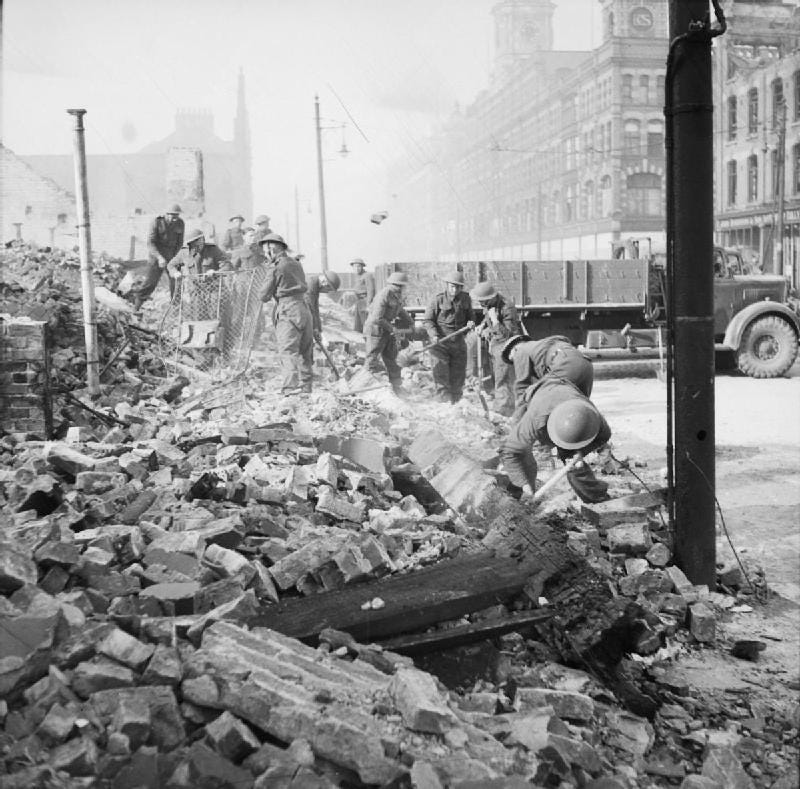
The Belfast Blitz left tens of thousands homeless (a quarter of its population) and Catholic areas were particularly badly hit. People were angry at the slowness of the government response. At the same time, the Blitz did bring people together for a short time, although this solidarity was short-lived. Tommy Henderson, Independent Unionist MP for Shankill said in the Northern Ireland Parliament:
“The Catholics and Protestants are going up there (Hannahstown) mixed and talking to one another. They are sleeping in the same sheugh, below the same tree or in the same barn. They all say the same thing, that the government is no good.” (Farrell, 198012)
Bernard was transferred in 1943 to the Royal Army Service Corps (RASC), I don’t know where or in what role13. The RASC was the logistical branch of the British Army, and was responsible for transporting and supplying the troops with everything necessary for them to survive, ensuring the army was mobile and could remain fit to fight. It was disbanded in 1965. I have applied to the Ministry of Defence for Bernard’s records, and will update this if, and when, I get more information.
Post-War Germany
After the war, Bernard was sent by the Foreign Office to occupied Germany. Originally the Control Office for Germany and Austria (CCG) oversaw the British occupation until it was incorporated into the Foreign Office German Section (FOGS) in 1947. In 1948 the four occupation zones no longer functioned as originally agreed, due to the Soviet blockade of Berlin (a reaction to the introduction of the Deutschmark), and instead the British, American and French had economically merged into a ‘trizone’. On 20 June 1949 the Federal Republic of Germany (FRG) was founded in this trizone, i.e. the Western part of Germany. The Soviet zone became the German Democratic Republic (GDR) shortly afterwards. On 5 May 1955, FRG was given full sovereignty and occupation was terminated (except in Berlin), so the period where Bernard was working there was a transitionary one14.
The main objectives of the British in the time immediately after the war was the denazification of government and industry, and to shut down the German war machine irreversibly. But also it was tantamount to get the country running again, so that people didn’t starve, could work and move around. This was a subject of some debate in October 1945 in the UK Parliament, as the immediate situation after the war was dire15. General Montgomery was central to the first response, issuing a directive to address shortages of food, fuel and housing, improve transport, restart the education system, industry and democracy.
For this Germany required coal, gas and oil, all of which could be found but no longer had any infrastructure or administration. A wide range of skills were required for this. Bernard’s knowledge of running an oil installation was put to a new use: helping to restart the oil industry in Germany which was in the process of being rebuilt. According to the British Imperial Calendar, he worked for the Office of the Financial Advisor (Administrative), Oil Branch, and was a Control Officer Grade I. The “Grade I” suggests that he held a senior professional position, not a clerical one16. His job would have been supervisory rather than operative. Probably he would report to the Office of the Financial Advisor on budgets and expenditure, and liaise with the German authorities.
The question here is how transitional his role was and whether the goal was to not just rebuild the industry physically, but to hand back control once the new democracy was in place. This was the time immediately following the currency reform from the Reichsmark to the Deutschmark in 1948, so financial stabilisation was at the top of the agenda. The rebuilding of Germany was part of the Marshall Plan and the funds of the European Recovery Programme (ERP) needed to be carefully monitored, effectively used and diversion or misuse of funds prevented. This might have been part of his remit.
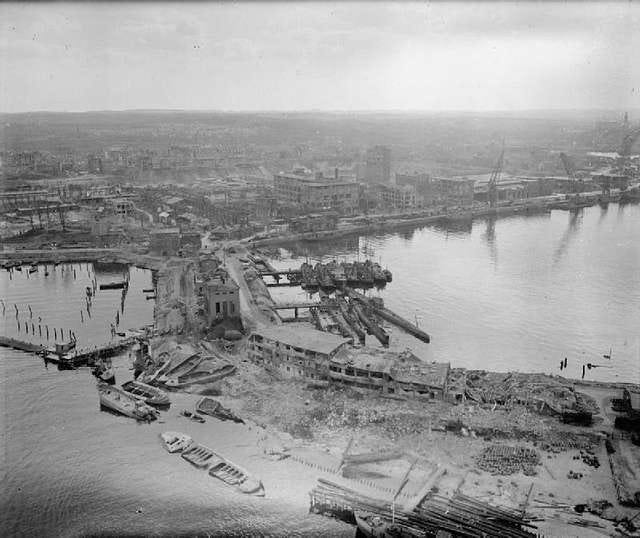
He worked in Kiel and then in Hamburg, the two German cities that were central to the oil industry. The port facilities and storage tanks had been heavily bombed during the war. It was seen as essential to get oil back up and running in order to fuel the reconstruction effort and also supply the occupying military. For the allies, oil was treated as a controlled strategic industry that needed to be carefully overseen. Because the main ports of Kiel and Hamburg were crucial to the import, storage and distribution of crude oil, petroleum and other products to the rest of Germany, and were in the British Zone, this task fell to the Foreign Office and its Oil Branch.
Kiel had been a major military hub and a shipbuilding centre, where fuel was stored and needed to be closely guarded against diversion or rearmament of the German military. So all fuel was licensed and rationed, amounts and destinations needing to be logged exactly. A Control Officer would be responsible for approving or rejecting fuel allocations and investigating anything that seemed irregular. Drawing the line between civilian and military use was paramount. The aim was economic recovery while preventing a reemergence of the military threat that had been destroyed at such great cost to the lives of the Allies. Part of the job may have been to dismantle the military part of the oil storage facilities.
At the same time, major oil companies were trying to muscle in on the business, like Shell and BP. Bernard also knew how these companies worked from the inside from his time in India, so he was well placed to be able to help regulate their operations, approve contracts, and monitor pricing. Hamburg was the place where the licenses were issued to these companies.
This quiet and systematic work enabled the “Wirtschaftswunder” that was to follow for Germany. Interestingly, Britain did not receive the same amount of Allied attention to reconstruction and over the decades that followed, some felt that Germany had profited more from losing the war than Britain in “winning” it.
Oil, occupation and colonisation
Bernard was part of transitionary systems in India and Germany before sovereignty was handed over following occupation. But on a personal level, his views on both Indians and Germans were very low. I was only quite young when I met him first, but I was taken aback at the derogatory way he spoke about the Indian people, and I have heard that he was not much more friendly about the Germans.
As a young woman, I went to an exhibition with my mother in Berlin on colonialism, that put indigenous art next to colonial art. It exposed the contrast between perceptions of the colonised countries by the colonialists and by the colonised. I remember arguing with my mother about the morality of occupation and the perception of the occupied as somehow lesser beings. Similarly to my grandfather, she tried to counter with the idea that the colonial or occupying powers were assisting the country to be more effective and economically successful.
Yet, the price that was paid was always in terms of resources. By 1948, Britain was financially exhausted and had all but lost its Empire, while the next threat was emerging in the form of a Cold War with the Soviets. Having control of the oil industry in the centre of Europe meant that they were able to recoup some economic power, and British oil companies like BP and Shell were given lucrative contracts, as they were seen to be trusted partners. They were the first to get licenses and were given access to storage, terminals and distribution networks. German companies were less likely to get contracts as they were still not financially stable, had no infrastructure, and were seen as less trustworthy. British officials, like Bernard, probably used their influence on port usage and storage rights, as well as priorities for distribution.
With power over the pulse of reconstruction through fuel supply, the British could control commercial relationships. Also, the money flowing into Germany from the USA through the Marshall Plan was partly spent on importing oil, supplied by British companies. Through these companies, Britain earned revenue while appearing to be helping Germany back on its feet. Of course, this was criticised by the Germans as economic occupation and foreign domination, but the government was prepared to accept it as the price of recovery.
Added to this, the dependence on oil increased in Europe post-WWII, probably directly as a result of the Marshall Plan. In 1956, the Technical Oil Committee of the Organisation of European Economic Cooperation (OEEC) called oil the “life-blood of industry, agriculture, and transport”, maintaining that without it, economic and technical development as well as individual prosperity would be “retarded”. This reflected a change that had come about during the rebuilding of Europe in the post-war years in which the construction of petroleum infrastructure and the reliability of oil supply was prioritised. The refinery industry was developed as the main energy supply for agriculture, industry and transport.
It has been argued that the United States became an “Empire by invitation”, shifting the energy focus from coal-rich Europe to oil-rich USA. There is a strong body of research literature on the place of oil in Europe’s reconstruction through the Marshall Plan17. Before the war, coal was the main supplier of energy in Europe. But after the war, the production of coal had been hampered by damage to its infrastructure and imports made problematic by the worsening relationship to Eastern Europe which was in Soviet hands. The oil infrastructure was also destroyed by the systematic bombing called the “Oil Plan” between May 1944 and the end of the war. Europe had very little crude oil of its own, but the United States and the Middle East had plenty. So the emphasis was on reconstructing and expanding the oil infrastructure across Europe, rather than the coal industry which continued but did not greatly expand. Between 1948 and 1958, however, the consumption of oil products more than tripled in Europe.
In the time of the “Great Acceleration” of human activity and environmental impact after 1945, petroleum consumption grew exponentially, not just driven by supply of cheap oil and increased demand, but also managed by government agencies and bureaucrats18. Petroculture became societally pervasive to the point where the “Otto-Normal” (the German word for the ordinary man) became utterly dependent on his car, and the German car industry was at the heart of the “Wirtschaftswunder”.
Bernard may not have been aware of the big picture and what it would mean for energy in Europe, but he was part of it, knowingly or not. Imperialism was central to his life but it is unlikely that he wanted to trade the British Empire for the US-American one. At the same time, the shift from coloniser to dependent in the relationship between the United Kingdom and the United States came about in his time, and continues to this day.
The later years
Bernard and Norah split up somewhere in there, though I have not found out when exactly. He met Joan Margaret Boucher and began living with her in the 1950s. In 1959, he married her19, so possibly the divorce from Norah came through at that time. Joan died in 1974.
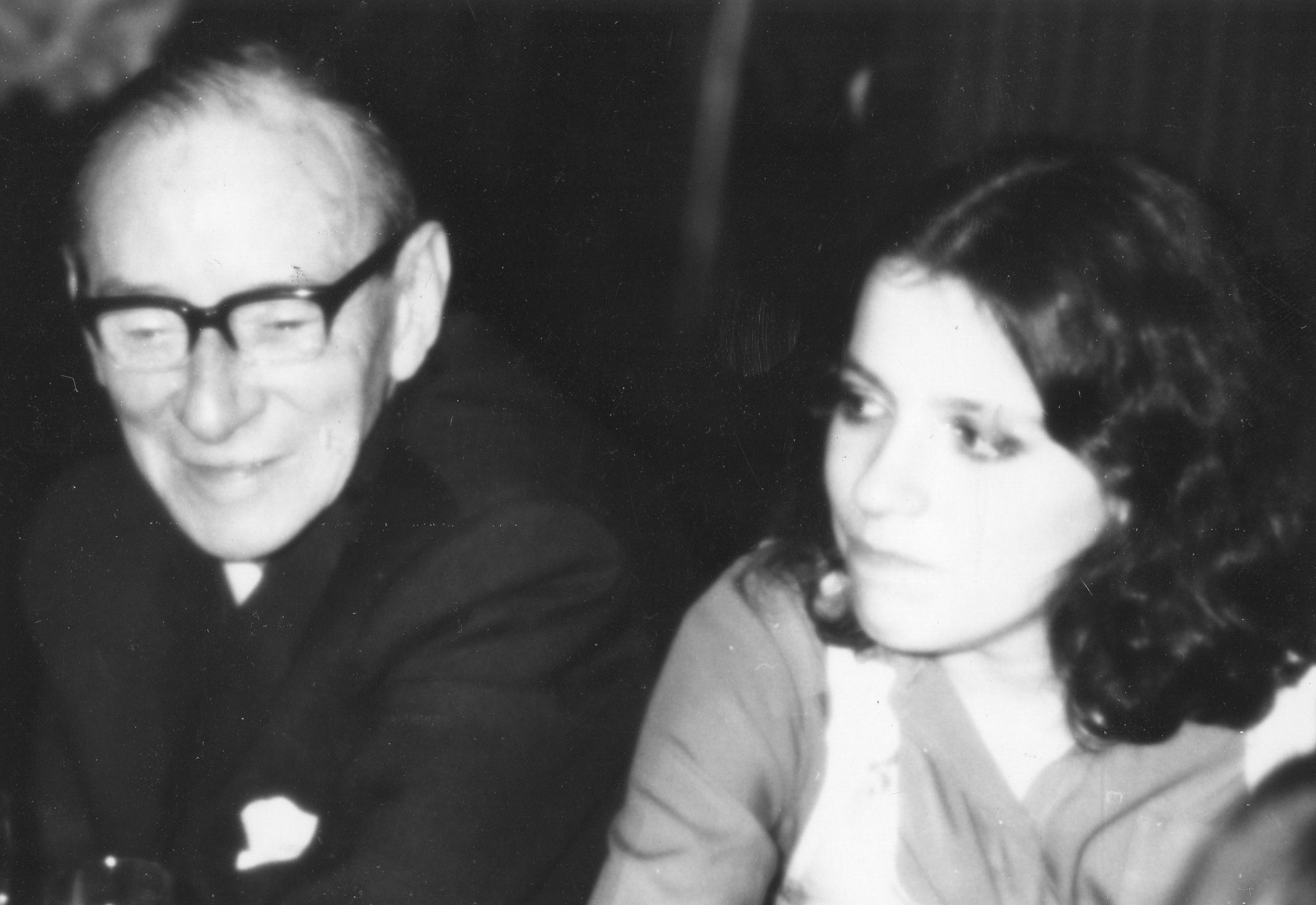
Bernard lived many more years in Kent, dying in a Royal British Legion Home for the elderly in Broadstairs, Kent, on 18 Apr 1988. As a lifetime smoker it was no wonder that he died from chronic obstructive airway disease and congestive cardiac failure, as well as a cerebral thrombosis and general arteriosclerosis20. But he was 89 years old, so he had – as they would say in cricket – had a good innings.
Sources:
England & Wales, Civil Registration Birth Index, 1916-2007, General Register Office; United Kingdom; Reference: Volume 2b, Page 563; Volume Number: 2b; Page number: 563, Sylvia E Blenkiron birth registered Oct-Nov-Dec 1937 in Portsmouth, mother’s maiden name Ruegg.
Exact birth date provided by Sylvia herself.
Hampshire Telegraph: Hayling Island. Cricket, 16 Jul 1937
British Phone Books, 1880-1984, BT Archives; London, England; British Phone Books 1880-1984; Page number: 245, Name: B Blenkiron; Address: HaIfway Filling station Lancaster ho London rd Higham Shorne; Publication Year: 1940; Directory Place: London, England.
British Phone Books, 1880-1984, BT Archives; London, England; British Phone Books 1880-1984; Page number: 25, Name: B Blenkiron; Address: 52 Harberton park.; Publication Year: 1941; Directory Place: Belfast, Aberdeen, Angus, Midlothian, Renfrewshire, Northern Ireland; Exchange: Belfast.
UK, Army List, 1942, Blenkiron, B, https://www.fold3.com/record/744404556/blenkiron-b-uk-army-list-1942?xid=1945
Belfast Newsletter: Army XI v. Ulster. Akers-Douglas to captain side at Ormeau, 2 Jul 1942.
Grang JA: A social history of the British Army 1939-45, 1992, available at CORE, accessed 27 Jan 2026 https://files01.core.ac.uk/download/429729134.pdf
Willans H: Army Welfare and Education, p.252, in Journal The Journal of the Royal United Service Institution, 1941-05, available at Internet Archive, accessed 27 Jan 2026 https://archive.org/details/sim_rusi-journal_1941-05_86_542/page/252/mode/2up
Doherty P, Poole MA: Ethnic residential segregation in Belfast, Centre for the Study of Conflict, University of Belfast, 1995, available at Internet Archive, accessed 27 Jan 2026 https://archive.org/details/ethnicresidentia0000pcdo/page/n1/mode/2up?q=Ethnic+Residential+Segregation+in+Belfast%2C+Northern+Ireland%2C+%221971-1991%22
War Office/Army Council: The Soldier’s Welfare. Notes for Officers, p.15, leaflet, 1941, available at State Library Victoria, accessed 27 Jan 2026 https://find.slv.vic.gov.au/discovery/fulldisplay/alma9919818253607636/61SLV_INST:SLV
Grenfell D: Welfare, Education and Vocational Training, Hansard Column 404-408, 25 Feb 1943, accessed 27 Jan 2026 https://hansard.parliament.uk/%E2%80%8CCommons/1943-02-25/debates/630dec47-ea4e-428a-8304-f5d158c940d8/CommonsChamber
Doherty, 1995
Farrell M: Northern Ireland: the Orange State. Pluto Press, 1980.
UK, London Gazettes World War II Military Notices, 1939-1945, The Gazette: Crown Copyright; https://www.thegazette.co.uk; The Gazette, Official Public Record 1665-Present; Volume Number: 36182; Page number: 4237, Name: B. Blenkiron; Military Rank: War Substantive Lieutenant; Military Date: 10 Jul 1943; War: World War II; Military Unit: Royal Army Service Corps; Military Regiment Number: 139660; Publication Date: 21 Sep 1943; Publication Place: London, England; Refence Number: 36182.
CC Germany: CCG organisation, Control Commission Germany 1945-49, accessed 27 Jan 2026 https://www.ccgermany.org.uk/organisation
UK Parliament: Conditions in Europe, Parliamentary Debate, 26 Oct 1945, Hansard, accessed 27 Jan 2026 https://api.parliament.uk/historic-hansard/commons/1945/oct/26/conditions-in-europe
British Imperial Calendar, 1951, p.309, Hathi Trust, https://babel.hathitrust.org/cgi/pt?id=uva.x030598974&seq=179&q1=blenkiron
Lundestad G: Empire by Invitation? The United States and Western Europe, 1945-1952, Journal of Peace Research, vol. 23, 3, 1986, 263-277.
Groß R: Creating the conditions for Western European Petroculture: The Marshall Plan, the politics of the OEEC, and the transition from coal to oil, Journal of Energy History, 1 Aug 2023, accessed on 27 Jan 2026 https://www.academia.edu/108993034/Creating_the_Conditions_for_Western_European_Petroculture_The_Marshall_Plan_the_Politics_of_the_OEEC_and_the_Transition_from_Coal_to_Oil
England & Wales, Civil Registration Marriage Index, 1916-2005, General Register Office; United Kingdom; Volume: 5d; Page: 1384, Bernard Blenkiron marriage to Joan M Boucher registered Apr-May-Jun 1959 in Wandsworth.
Death certificate: General Register Office Entry of Death, QBDAE: 450594. 153/ Thanet County of Kent/ Eighteenth April 1988 Maurice House, Callis Court Road, Broadstairs/ Bernard BLENKIRON/ Male/23 May 1898 Huddersfield, West Yorkshire/ An Accountant (retired)./ Alan Plummer/ Causing the body to be cremated/Maurice House. Callis Court Road, Broadstairs, Kent/ I(a) Cerebral Thrombosis (b) General Arteriosclerosis (c) Ischaemic Heart Disease II Chronic Obstructive Airway Disease and Congestive Cardiac Failure. Certified by S.F. Shariff M.B./ Twenty first April 1988/ C Salisbury Registrar
This was a really interesting profile of a person at the center of a world historical shift. You contextualized his life and work really well. I had never thought about the advent of the "petro culture" in Europe as part of the Marshall Plan, but of course American preeminence created the structures that the rest of the world lived within. Great piece.
Found this really interesting, Xanthe. And good to see your references too.