Bernard – the Oil Man
Part 4 of The Blenkiron Brothers

If you missed the intro and the first three parts of “The Blenkiron Brothers”, you can find them here:
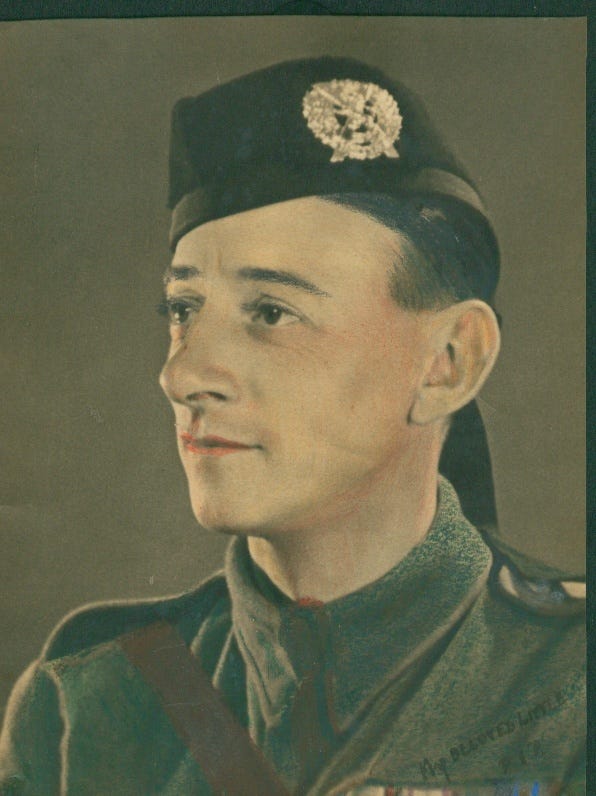
The youngest of the Blenkiron brothers was born on 23 May 1898 in Huddersfield, Yorkshire, my grandfather: Bernardi. There is a possible mystery about him that I wrote about earlier in this year, regarding his father. We are still waiting for some DNA results to help us decide who in fact Bernard’s father is: Duncan Stewart Blenkironii, or could it possibly be his stepfather, Sutherland Fraser Harrisiii, who my great-grandmother Adaiv married six years later when her divorce came through?
The 1901 census is no help either, as there is no record for Bernard to be found, only Ada alone in Regent Streetv. After leaving 94 Fitzwilliam Street in Huddersfield where he was born and most likely moving to 3 Aberdeen Walk, Scarboroughvi, with his mother—possibly without his father—we find nothing of him until 1911. In the census of 1911 he lives in a large house in leafy suburbia belonging to his stepfather (or is he his father?): 10 Haydn Avenue, Purley, Surreyvii.
Like his brothers, he joined the Armed Forces for the First World War. In contrast to his brothers, there are very few military records of his Great War service, so all I know is that he was at 17 a Private in the London Regiment, the 14th Battalion (London Scottish)viii which served in the trenches on the Western front in France and became the 56th Division. So, in his short stay with them he may have seen some mud and blood. He enlisted with the Army Pay Corps (APC) in August 1916 and received the Victory and British medals with them. Since he attained the Victory medal, he must have been posted abroad in an active serviceix.
The Army Pay Corps was an administrative body, managing the pay of troops and dependents’ allowances. It is not clear whether he moved there to become a clerk, which was his later occupation, or whether he was influenced by his brothers Duncan and Harold who had both worked in offices, Duncan as a commercial clerk and Harold as a book-keeperx, before going to war. His father, Duncan Stewart, had also started out as a clerk before becoming a commercial traveller, and then an auctioneer. So, office work ran in the family.
He also received a Silver War Badge, meaning that he had become wounded or sick and had to be discharged because of this. This is confirmed by the reason for discharge on 21 Dec 1918: King’s Regulation 392 (xvi) which is given when the soldier is no longer physically fit for war servicexi.
The British Indian years
After the war, Bernard emigrated to India. On 30 Oct 1920 he travelled from Liverpool to Bombay on the “City of Calcutta”. He was 21 and calling himself an accountantxii, having probably learnt accountancy, or been an accounts clerk, through his work with the APC, but perhaps he had also found work in this field between discharge and emigration.
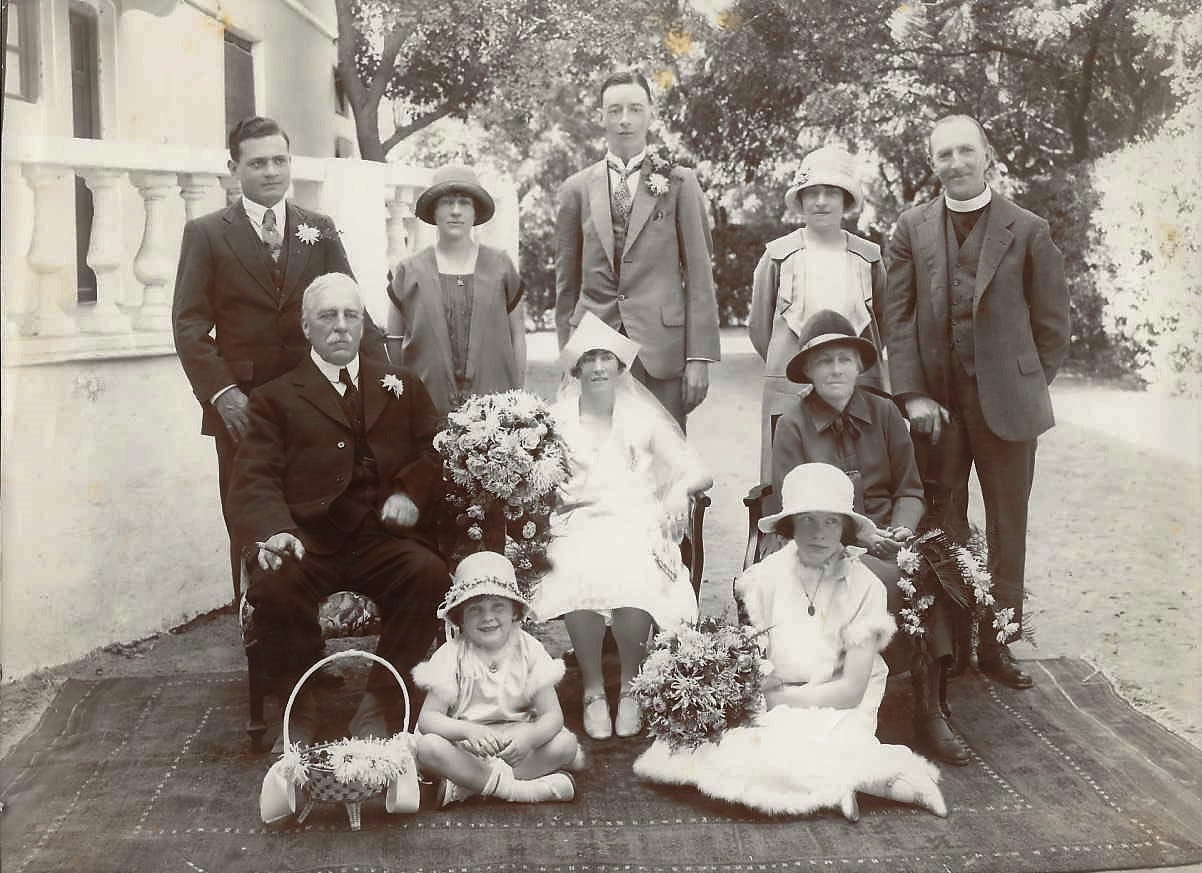
When he married an Indian Army Major’s daughter, Norah Ruegg, on 7 Dec 1926 in Agra, he was 28 and still giving his occupation as an “accountant”xiii. But by the time his first child, Duncan Hugh, was born on 4 Apr 1930, he said he was working as an “office manager” for the Burmah Shell Oil Coxiv.
Burmah Shell was an amalgamation of the Burmah Oil Company (BOC) and Shell’s Indian affilate, companies that had previously been competing for the petroleum and kerosene distribution market in India. The merger took place in 1928, so Bernard was one of their first staff and was based at Budge Budge in the Calcutta docks area where BOC had an installation. The distribution of oil in India was essential for transport, industry and early aviationxv xvi.
It was common for British Indian families to have more than one residence, as the summers in India were very hot, so their womenfolk and children stayed at the “hill stations”. In this case, their first child, Duncan Hugh, was born in Simla, at the foot of the Himalayas, where Norah’s family also lived.
When Duncan was only one year old, the family returned for a visit to England, staying in Chinnor, Oxfordshire with Bernard’s mother, Ada. Bernard gave his occupation for the passage records on return as “Office Superintendent”, a relatively senior administrative position at the Burmah-Shell Oil Storage and Distributing Co. of India Ltdxvii. He would have been in charge of keeping the installation’s operations in Budge Budge running, involving administrative, supervisory, accounting, and operational coordination tasks, including overseeing day-to-day operations, allocating tasks and maintaining discipline. He would also have had to communicate with railway and shipping agents and other local partners to transport their products across India.
My mother was born on 5 Oct 1932 in Budge Budgexviii, but most likely spent her summers at the hill station. In any case, the children were looked after by an Ayah (an Indian nanny), so their parents had very little to do with their upbringing. She talked more about this woman, although I don’t know her name, than about her own mother, and a great deal more affectionately.
This period of Indian pre-Independence history was turbulent. The Non-cooperation movement, led by Mahatma Gandhi, started around the time Bernard first arrived in the country. The civil disobedience movement challenged the British authority, but after arrests in 1922 of its leaders, it was paused. By 1930, with the declaration of Purna Swaraj, Nehru’s Indian National Congress had declared “self-rule” and called for full sovereignty. The Independence Movement went into full swing. The 1930 renowned “Salt March”, a 385 km march through the province of Gujurat to the ocean, protested the British monopoly of salt and resulted in Gandhi and Nehru’s arrests.
The Government of India Act was passed in 1935, establishing a framework for self-governance in India. A federal structure with provincial autonomy was introduced with legislative, public service, and financial institutions. This laid the foundations for independence, but still Britain was to retain controlxix.
By 1937 the first provincial elections took place and Indians were allowed to elect legislatures with restricted powers, although British governors could still veto their decisions. In this election, the Indian National Congress had a major victory, taking 7 of the 11 provinces and forming ministries in these. This led to changes—in education, land revenues, and the use of language in administration. Added to these, police repression was limited and political prisoners releasedxx.
The British hope that with elections they could retain imperial control but stabilise an agitating population was dashed. Instead the drive for independence was strengthened by these successes. However, after the elections, civil disobedience was no longer the strategy of the Indian Congress, rather it was to consolidate provincial power and institutions, and to build pressure to shift from local to national governancexxi.
Probably, none of this would have affected the day-to-day running of the oil business but there would have been major changes and adaption would have been necessary to continue operating smoothly. Provincial scrutiny of the company’s policies regarding prices and distribution would have increased. There would also have been pressure to promote Indians into higher positions, including supervisory and coordinatory roles. There was a general atmosphere of criticism towards foreign companies. But Burmah Shell countered by being a large employer of local people and avoided aligning itself politically. India needed oil and at that time there were no viable alternatives. While the Indian Congress politicians were pragmatic, they became increasingly aware of the issue of strategic resources being controlled by a foreign power.
At the same time, things were also hotting up in Europe with the rise of fascism. It was time to go home. On 13 Apr 1937, the family set sail for England on the “Tuscania” in tourist class. Bernard was 38 and entered his occupation in the passenger list simply as “clerk”. Norah was 33, Duncan 7, and Daphne 4 years oldxxii.
Next: Bernard—Entertainment, Occupation and Oil
Endnotes
i Here’s Bernard’s Wikitree profile with all sources: https://www.wikitree.com/wiki/Blenkiron-15
ii Duncan Stewart Blenkiron, b. 14 Jun 1865 in Aston, Warwickshire, d. 1 Dec 1936 in Fulham, London. Wikitree profile: https://www.wikitree.com/wiki/Blenkiron-14
iii Sutherland Fraser Harris, b. 3 Sep 1873 in Edinburgh, Midlothian, Scotland, d. 22 May 1918, Dartford, Kent, England. Wikitree profile: https://www.wikitree.com/wiki/Harris-18303
iv Ada Elicia Phelps, b. 7 Dec 1872 in Cheltenham, Gloucestershire, d. 30 Sep 1942, Thame, Oxfordshire. Wikitree: https://www.wikitree.com/wiki/Phelps-851
v 1901 England Census: Class: RG13; Piece: 97; Folio: 125; Page: 30; ED, institution, or vessel: 5; Household schedule number: 125.
Ada Blenkiron (28) head of household in St James Westminster in Westminster registration district in London, England. Born in Cheltenham, Gloucestershire, England.
vi Birth certificate: General Register Office Entry of Birth, 1898, Huddersfield. 30/ Twenty third May 1898 Fitzwilliam Street/Bernard/Boy/Duncan Stuart Blenkiron/Ada Blenkiron formerly Phelps/auctioneer/Ada Blenkiron Mother 44, 3 Aberdeen Walk Scarborough as per Declaration dated 4th July 1898/ Fifth July 1898/ Alfred E Wade Registrar
vii 1911 England Census, The National Archives of the UK (TNA); Kew, Surrey, England; Census Returns of England and Wales, 1911; Registration District Number: 39; ED, institution, or vessel: 03; Piece: 3274, Bernard Blenkiron (12) stepson, School, in household of Sutherland Harris (39) at 10 Haydn Avenue, Purley, Surrey, Coulsdon, Surrey, England. Born in Huddersfield, Yorkshire, England.
viii Picture of Bernard shows him in uniform of 1/14 London (Scottish) regiment. Regt. No: 515234. Also: UK, World War I Service Medal and Award Rolls, 1914-1920, The National Archives of the UK; Kew, Surrey, England; War Office and Air Ministry: Service Medal and Award Rolls, First World War. WO329; Ref: 2122, Name: Bernard Blenkiron; Military Year: 1914-1920; Rank: Private; Company: WO 329; Regiment or Corps: Royal Army Pay Corps; Regiment Number: 23663; Medal Awarded: British War Medal and Victory Medal.
ix Ibid.
x See 1911 England Census
xi UK, Silver War Badge Records, 1914-1920, The National Archives; Kew, Surrey, England; War Office and Air Ministry: Service Medal and Award Rolls, First World War. Silver War Badge. RG WO 329, 2958–3255; Reference: 329; Piece: 3242, Name: B. Blenkinson; Rank: Pte.; Military Year: 1920; Regiment: Army Pay Corps; Regimental Number: 23663; Discharge Unit: Royal Army Pay Corps; Discharge Regiment: Army Pay Corps.; Badge Number: B120071; List Number: RAPC 0001-0220; Record Group: WO; Record Class: 329.
xii Board Of Trade: Commercial And Statistical Department And Successors: Outwards Passenger Lists, The National Archives; Series: BT 27, Title: MR; Destination place - country: INDIA; First name(s): B; Destination country: India; Last name: Blenkiron; Ship’s official number: 115759; Sex: Male; Occupation: Accountant; Ship’s departure port: LIVERPOOL; Departure year: 1920; Ship’s destination country: Pakistan; Departure country: England; Departure port: Liverpool.
xiii British India Office Marriages, Reference: N-1-497; Folio: 145, Norah Ruegg (23), daughter of Alfred James Ruegg, marriage to Beonard Blenkison (28), child of Duncan Blenkison, on 7 Dec 1926 in Agra, Bengal.
xiv British India Office Births & Baptisms, British Library, Reference: N-1-524; Folio: 184, Duncan Hugh Blenkiron, birth 4 Apr 1930 Simla (Anglican), parents: Bernard, Office manager, BURMAH SHELL OIL Co.; Norah. Bengal.
xv Bharat Petroleum: Our Journey. The Bharat Petroleum story, archived 11 Oct 2018, problems with accessing https://web.archive.org/web/20181011133503/https://www.bharatpetroleum.com/about-bpcl/our-journey.aspx
Bharat Petroleum: Innovating Today for India’s Energy Future. A pioneering approach. Last updated 18 Nov 2025, accessed 27 Jan 2026 https://www.bharatpetroleum.in/about-bpcl/our-journey/a-pioneering-approach
xvi Shell Inc.: Celebrating a century of trust and partnership in India. No date given, accessed on 27 Jan 2026 https://www.shell.in/about-us/who-we-are/celebrating-a-century-of-trust-and-partnership-in-india.html
xvii UK and Ireland, Outward Passenger Lists, 1890-1960, The National Archives; Kew, Surrey, England; BT27 Board of Trade: Commercial and Statistical Department and Successors: Outwards Passenger Lists; Reference Number: Series BT27-147827, Name: Bernard Blenkiron; Gender: Male; Departure Age: 33; Birth Date: abt 1898; Departure Date: 28 Aug 1931; Departure Port: England; Ship Name: Rawalpindi; Shipping Line: P and O Steam Navigation Company; Destination Port: Bombay, India.
xviii British India Office Births and Baptisms, British Library, Reference: N-1-544; Folio: 53, East India Company. Daphne Miriam Blenkiron baptism on 18 Dec 1932 (born 5 Oct 1932), daughter of Bernard and Norah Blenkiron, Burma Shell Coy. Budge Budge; Asst. Burma Shell Coy; in Kidderpore, St Stephen’s church, Bengal; V. F. Hambling Chaplain of Kidderpore
xix edukemy: Congress rule in provinces and its evaluation. No date given, accessed 27 Jan 2026 https://edukemy.com/free-resources-for-upsc/prelims-notes/government-of-india-act-1935/congress-rule-in-provinces-and-its-evaluation/101947
xx Encyclopedia Britannica: Provincial elections of 1937, 16 Dec 2025, accessed 27 Jan 2026 https://www.britannica.com/topic/Indian-Independence-Movement/Provincial-elections-of-1937
xxi Taylor DD: Indian politics and the elections of 1937, 1971, PDF accessed 27 Jan 2026 https://soas-repository.worktribe.com/OutputFile/389306
xxii UK and Ireland, Incoming Passenger Lists, 1878-1960, The National Archives in Washington, DC; London, England, UK; Board of Trade: Commercial and Statistical Department and Successors: Inwards Passenger Lists; Class: Bt26; Piece: 1117; Item: 90, Name: Bernard Blenkiron; Arrival Age: 38; Birth Date: abt 1899; Port of Departure: Bombay, India; Arrival Date: 13 Apr 1937; Port of Arrival: Liverpool, England; Ship Name: Tuscania; Shipping Line: Anchor Line; Official Number: 146307.
Very interesting.