
On Friday, I posted a piece about my grandmother, Barbara Julia. My intention was, for Women’s History Month, to try to post daily about my Ancestral Women. Last year, Robin Stewart of Genealogy Matters challenged us to do just that, and I did my best, but daily posts are beyond me. This year, Robin has challenged us — in the framework of her Storytellers’ Challenge — to post about our Ancestral Women once a week during March, and has suggested a list of prompts. That sounds more do-able, so I think I’ll go for that instead.
The main challenge in writing about the women in my family is that their stories are almost completely invisible. If there are no living family members to tell you stories about Grannie or Auntie So-and-so, then you have very little except vital records to help you build a story. Before the women got the vote, they weren’t even in the electoral register. Mostly we can find out when and where they were born, who their parents were, who they married, how many children they had (and lost), and when they died. If they didn’t get married or had no children, sometimes they strayed from this beaten path and had a career, maybe becoming a teacher, or they emigrated. Very few were able to combine family life with a career. If they were poor, they might have worked taking in washing or sewing, or maybe went into service as a maid or a housekeeper.
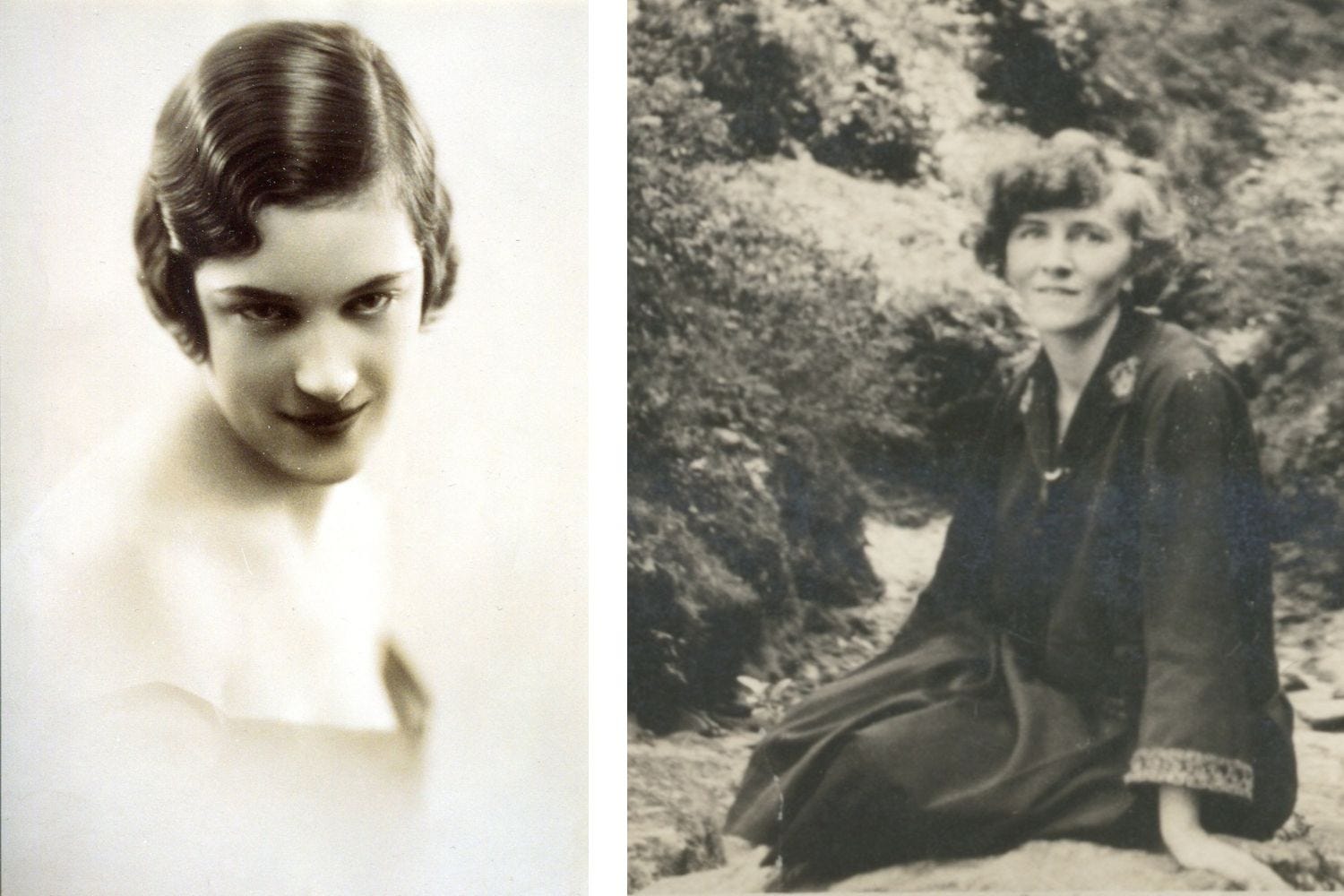
Neither of my grandmothers — Barbara and Norah — had paid work, as far as I can tell. Their occupation was given on official documents as “home duties”. They were middle-class women who were well provided for. They each had three children, and they had help to rear them when the children were small, and sent them away to school when they were older. I can’t find anything especially and obviously difficult about their lives, other than that their husbands left them for other women. Neither of them strike me as happy. The effect World War 2 had on them is hard to guage, but I don’t think either of them did any war service.
Going back another generation to my great-grandmothers, they remain equally opaque. On the paternal side, Kate is still a “black box” for me, I have very little knowledge of her life. Ellen or “Nellie” was a nurse. Both Kate and Nellie were most probably secondary carers in Barbara’s life, at least they appear in photos with the children.
On the maternal side, things are a little more dramatic: Flora was born in India and came from a patchwork family where lots of stories abound, although her married life was stable enough. As for Ada, well, you might remember Ada as the mother of the Blenkiron Brothers. Her life was full of problems.
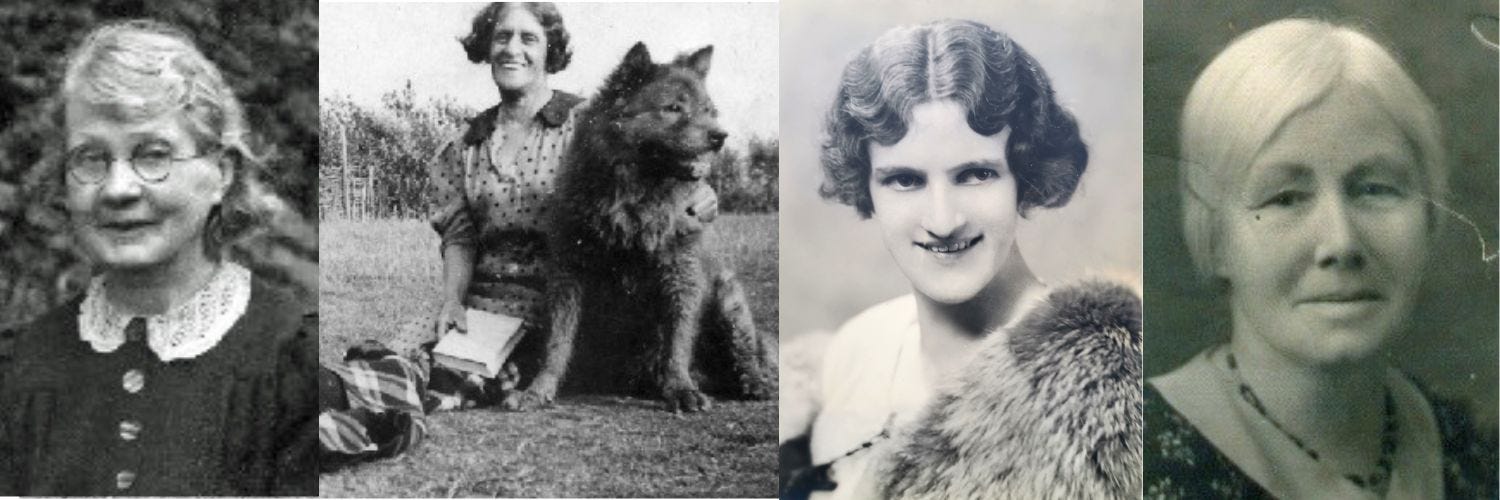
My second great-grandmothers are even more difficult to fathom. On my father’s side: Emma, Maria, Julia and Emma Jane have little in the way of detail to offer. On my mother’s side yet another Emma, and Helen, equally so. But here I find Elizabeth (Ada’s mother), who married twice and was a ‘wardrobe dealer’ in Birmingham. Or Martha (Flora’s mother), the daughter of a Eurasian “orphan” mother. Martha married twice, had her second husband thrown out by her sons, and took up midwifery in India. Those are stories that I can tell with gusto.
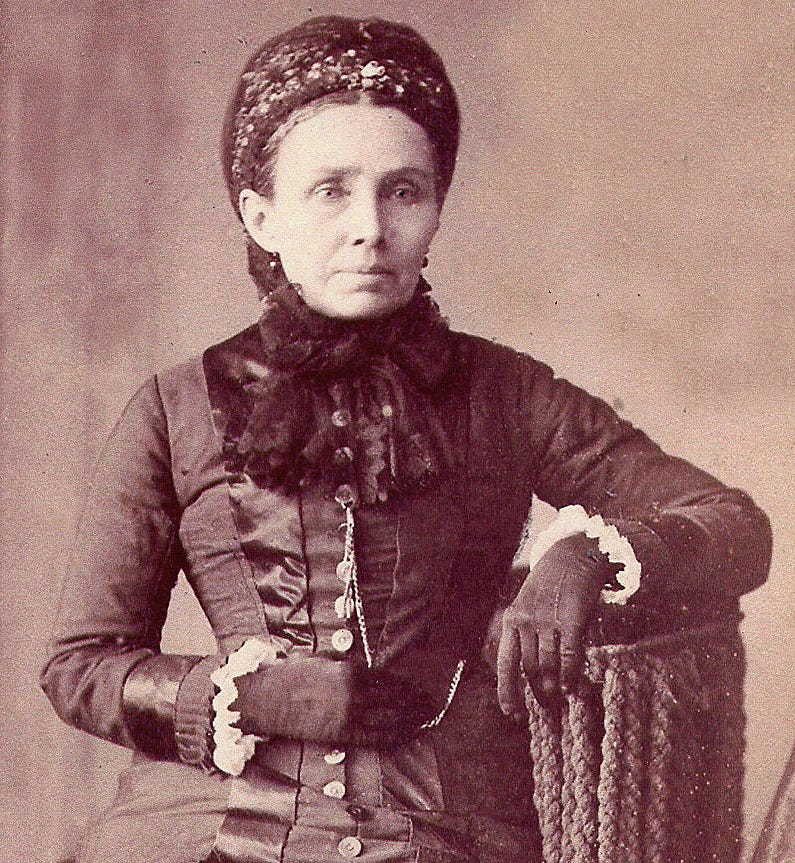
I would like to tell all of their stories, but not solely defined by what their husbands and sons did. One can suppose that they suffered loss, of children and husbands, endured multiple pregnancies, survived difficulties and wars, immigrated, and made important and even life-changing decisions. With anything between three and ten children the mental load they carried is unimaginable. I can talk about what they looked like, if there are any photos to share, like in the case of fashionable Barbara. But a lot of it will be speculation because very little remains from their lives: no letters, no mementoes, no newspaper articles, nothing much at all.
So probably there will be a fair bit of context thrown in to make the stories come to life at all. The children will be important, as that would be their main concern. And their husbands careers and health would have impinged on each woman’s life existentially. It is, indeed, a challenge.
I look forward to these. I need to look more closely at my ancestral women and get something down on paper, however minimal ... As a starting point to be added to when more information is uncovered. For so many of them evidence supported facts are in short supply. I have two second great grandmother's whose family names I can't find. Regrettably they remain Nancy, the wife of ... and Eliza the wife of ... So frustrating .
I’ll look out for your stories about the women in your family. Their stories are really hard to put together beyond the facts. My theme for to A to Z Challenge will be the Women in My Family. It has been very hard to write their stories beyond the facts