D is for Dinah
Part 3 of "Uncle Len, Wife-Killer"

I started out on this research journey because I wanted to honour my Aunt Dinah Julia Hall (1932-2009) as one of 31 women during Women’s History Month in March of this year. While going through the records, I discovered that she had married the same man twice: Samuel Leonard Thomas Ashworth, better known as Len, once in 19661 and again in 19812.
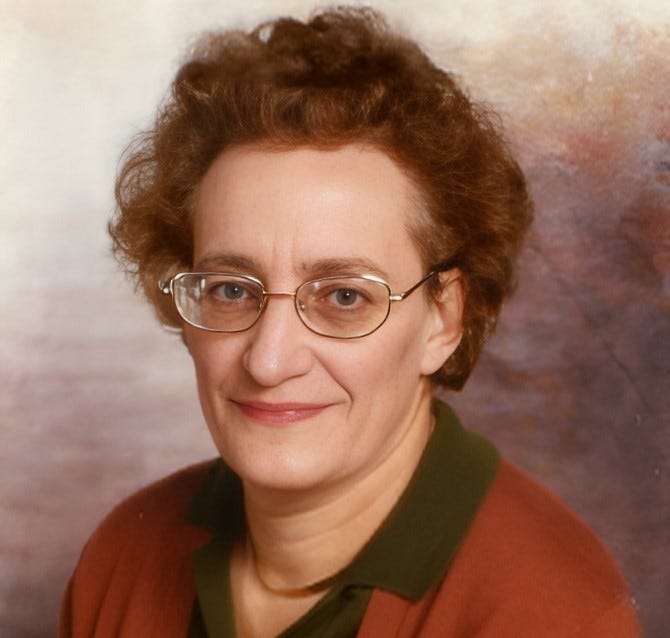
Not long before this, I had made a contact with a first cousin who knew Dinah and Len and asked her about it. Yes, she said, they were married twice, but she didn’t know why. Now in our family this is not unheard of. Our grandfather, Alf Hall married four times. The second and fourth wives were the same woman: my grandmother, Barbara. But that is another story.
So, I started looking to see if Len’s first marriage to Dinah in 1966 was his first one, as they were both already older. Len was 44, Dinah 34. That is how I discovered that Dinah was the fourth wife. Before her was Irene Elsie Munton3 (divorced), Irene Patricia Pettitt4, known as Pat (died), and Lisbeth Stilwell nee Frank5 (murdered).
I paused in astonishment. Murdered by her husband? Could it be that I had a murderer in the family?
I then went about trying to verify if Samuel Leonard Thomas was the same man as Uncle Len. I sent off to the UK General Register Office for the marriage certificates to see if Dinah’s father was Alfred Hall, my grandfather. Those certificates not only confirmed that Alfred was the father, the second one also gave me the information on their divorce on 2 May 19786. So they had split up, but why did they remarry three years later?
Dinah was born on April 9, 1932, the middle child of three. Her father, Alf, had a coach company and her mother, Barbara, was a housewife7. Apart from these bare facts, I have found very little that I can reliably say are definitely true. I know she became a school teacher but not where she trained, what or where she taught, though my stepmother mentioned Fulham. Dinah Julia Hall is not an uncommon name, and can also be mispelt Dina, given as Dinah J. or just Dinah Hall. One Dinah could be her, who lived in Muswell Hill from 1958 to 19658, and was a school teacher. (In a letter to the newspaper in 1959, she expressed her approval of a teacher who embarked on a world tour because of the value of his experiences to the teaching profession)9.
Since Pat, Len’s second wife, died in London10, it is possible that Dinah and Len also met in London, after he got out of prison, presumably no later than 1965. They were married in Westminster.
So how might a single school teacher in her thirties meet a convict in his forties and then get married? There are multiple possibilities of which one might be that she was actively looking for a husband, and did the same as Lisbeth before her, using a marriage bureau to advertise in the paper. Dinah was not deemed to be pretty and it would seem that her mother, who was quite a looker, let her unloved daughter know that she didn’t have a chance of finding a husband. After the war, men were in short supply.
I have to go off on a bit of a tangent here, because my stepmother was the one who told me that Barbara didn’t like Dinah. This was information I found difficult to comprehend, being a mother myself. How could a mother “not like” her daughter?” I asked. She explained to me that, generally speaking, after WW I and again, after the Second World War, girls were not wanted as much as boys. The lack of men made boys more desirable as offspring, especially as girls in middle class families were not sent out to work and often still required a dowry to be married.
Whether this applies to Dinah, I can’t say, because she did work as a school teacher, although school teachers were always single, childless women at this time, which is why they were always called “Miss”, a practice that continued until I was at school and in some schools to this day, irregardless of whether the female teacher is married or not. The marriage bar was, however, removed in the UK by 194611, unlike other countries such as Australia (1966) and Ireland (1973). So if Dinah had started teacher-training at 18, it would not have still been in place. Whether the practice continued informally until the Sex Discrimination Act of 1975 needs further research. [Reader: if you know more about the continuing practice of the marriage bar, do feel free to comment at the end of this post].
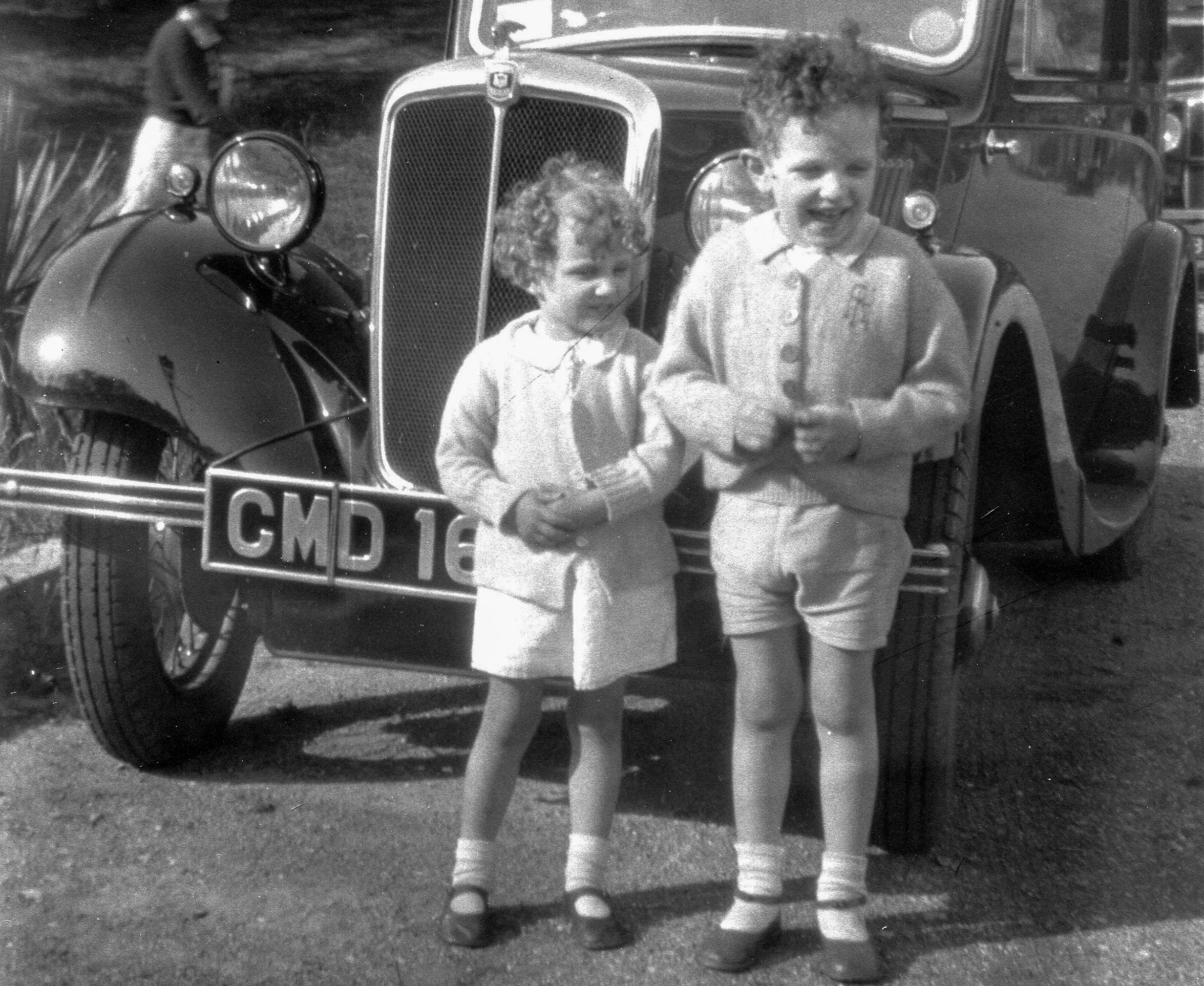
According to my father, my stepmother reports, he had happy memories of their early childhood as brother and sister. He acknowledged that their mother had “little time” for Dinah and he felt a sympathetic protectiveness towards her. When their parents moved from London to Minehead in Somerset, both Roland and Dinah went to the Minehead Convent School12. However, Roland was sent off to Christ’s Hospital School in Sussex when he was about 1213, as it became clear that he had a bright future because of his high intelligence levels. He went on to study Classics at Oxford and became a university lecturer in Philosophy. But I digress again. That is Roland’s story.
So Dinah became a school teacher and met Len somewhere around 1965. The question arises as to whether he told her about his past wives, his prison stay, or killing Lisbeth. Why they divorced is probably in their divorce papers. However, applying for a copy of a divorce record in England requires that you know the case number and the court where the divorce is granted, neither of which I have.
Dinah and Len disappear completely in the time between 1968 and 1981. The last we know of the couple at that time is that they were living in Millbank Borough, London, at 10 Bessborough Gardens, and their son was born there in 196714. The electoral register has them at that address in 196815. After that, nothing.
One theory is that Len went back to the Army and was posted to Germany. This is based on a very vague memory of my father telling me, when I was still quite young, that his sister lived in Germany. With memories, one can never be absolutely sure of their accuracy, but it is a plausible theory, depending on whether the UK Army employed convicted criminals. Len had been posted to Germany in the time before the murder and several of his children with Pat were born in Iserlohn, Nord-Rhine Westphalia16. As my stepmother commented, “if recruitment was slow, they may have waived a manslaughter charge through”. After all, soldiers are trained to kill, although not their wives. [Note to self: research domestic violence in the Army, also related to trauma].
To find Dinah in Germany, we must find Warrant Officer Samuel Leonard Thomas Ashworth, if indeed he was still a Warrant Officer. And if Len went back to the Royal Artillery and was based in Germany say, after 1970, then he would have been based in the British Sector. The sector covered Schleswig-Holstein, Hamburg and Lower Saxony, North-Rhine Westphalia, as well as a part of Berlin. I myself lived in Gatow, in the British sector of Berlin in 1985, when I first arrived in West Berlin, escaping from Thatcher’s unemployed Britain. But by this time Dinah and Len had remarried in Basingstoke. By 1985 Len would have been about 63 and most likely retired, certainly no longer in Germany.
If I was allowed to give my fantasy full reign, however, I might come up with the following story: About 1978 Dinah could have first found out about the killing of Lisbeth and left Len, heartbroken. Eventually, after much persuasion from him, she agreed that they should put the past behind them and start again, at least for the sake of their son. How she found out is another story, and a good one, but entirely fictional. It would be difficult to keep a murder and prison stay secret from your wife for a full 12 years.
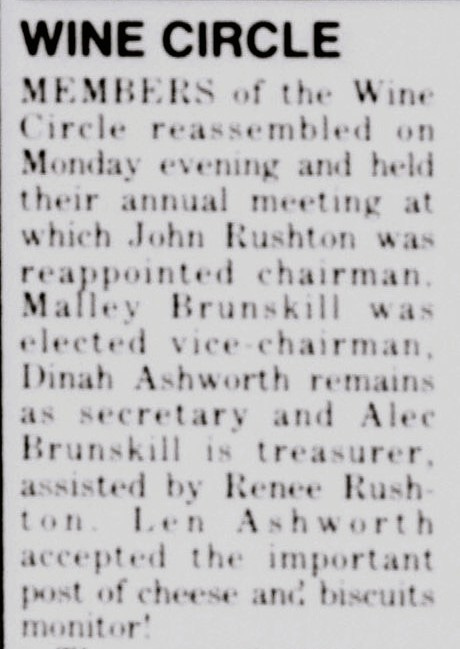
The couple turn up again in the village of Worsthorne, near Burnley, Lancashire, in the mid-1990s. Anne, a genealogy colleague on Substack sent me some newspaper clippings indicating that they were socially active and integrated in local activities such as the Wine Circle, of which Dinah was the secretary and Len the ‘cheese and biscuits monitor’17. Since Len was born in Lancashire18, it is likely that he wanted to return there in the latter part of his life, as many often do.
Dinah died in Worsthorne on the last day of 200919, and was buried in St John the Evangelist’s churchyard. As yet, I have not found a record for Len’s death but his son says he died on 18 Jun 2014.
(This post was updated and properly sourced on 14 Dec 2025)
Coming soon: F is for Femicide
Marriage (1) to 4th wife, Dinah Julia Hall, 1966: General Register Office, entry of marriage solemnized at The Parish Church of St. Stephen with St. John in the City of Westminster on 23rd July 1966 between the widower Samuel Leonard Thomas ASHWORTH (aged 43) and Dina Julia HALL (aged 34). Copy issued on 31 Mar 2025.
Marriage (2) to Dinah Julia Hall, 1981: General Register Office, entry of marriage solemnized the Register Office in the district of Basingstoke in the County of Hampshire on the 23rd December 1981, between Samuel Leonard Thomas ASHWORTH (aged 59) and Dinah Julia ASHWORTH (aged 49), previously married at the Parish Church of St. Stephen with St. John in the City of Westminster on the 23 July 1966. Marriage dissolved on the 2 May 1978.
Marriage to 1st wife, Irene Elsie Munton, 1944: England & Wales, Civil Registration Marriage Index, 1916-2005, General Register Office; United Kingdom; Volume: 7a; Page: 576, Irene E Munton marriage to Samuel L T Ashworth registered Apr-May-Jun 1944 in Leicester.
Marriage to 2nd wife, Irene Patricia Pettitt, 1949: England & Wales, Civil Registration Marriage Index, 1916-2005”, General Register Office; United Kingdom; Volume: 5b; Page: 1050, Irene P Pettitt marriage to Ashworth registered Jan-Feb-Mar 1949 in Folkestone.
Marriage to 3rd wife, Lisbeth Stilwell nee Frank, 1960: England & Wales, Civil Registration Marriage Index, 1916-2005, General Register Office; United Kingdom; Volume: 6a; Page: 83, Lisbeth Stillwell marriage to Samuel L T Ashworth registered Jul-Aug-Sep 1960 in Maidenhead.
General Register Office certified copy of an entry of marriage, 21 May 2025. Marriage at the Register Office in Basingstike, Hampshire. Twenty third December 1981, Samuel Leonard Thomas ASHWORTH, 59 years, building superintendent (private sector), father: James ASHWORTH (deceased), Engineer; Dinah Julia ASHWORTH, 49 years, School Teacher, father: Alfred HALL, Motor Coach Proprietor (retired), both of 9 Lark Close, Kempshott, Basingstoke. Previously married at the Parish Church of St. Stephen with St. John in the City of Westminster on the 23 July 1966. Marriage dissolved on the 2 May 1978.
General Register Office certified copy of an entry of birth, 20 May 2025. Birth registered in Kingston in the sub-district of Esher, Surrey, Ninth April 1932 Lindsay House, Masham Road East Mobray;Dinah Julia, Female; father: Alfred Hall, Garage Proprietor of Shrewsbury Place Richmond Road Isleworth; mother: Barbara Julia Hall formerly Clarke also of Shrewsbury Place Richmond Road Isleworth.
London, England, Electoral Registers, 1832-1972, London Metropolitan Archives; London, England, UK; Electoral Registers; Reference: Lcc/Per/B/3032, Name: Dinah J Hall; Electoral Date: 1965; Street Address: 81 Muswell Hill Road; Ward or Division/Constituency: Muswell Hill; County or Borough: Hornsey, England.
Hampstead News, 27 Nov 1959. “Teacher with a Wanderlust”, letter from Dinah Hall (school teacher), Muswell Hill Road, N.10.
Death of 2nd wife, 1960: England & Wales, Civil Registration Death Index, 1916-2007, General Register Office; United Kingdom; Volume: 5c; Page: 395, Irene P Ashworth death registered Jan-Feb-Mar 1960 in Westminster (age 35).
Collins R: What was the marriage bar? Who Do You Think You Are? 8 Jan 2024
Hall, Roland: Autobiographical notes for 80th birthday speech, given on 11 July 2010, transcribed by Xanthe Hall (not online).
Ibid.
Source withheld for privacy.
London, England, Electoral Registers, 1832-1972, London Metropolitan Archives; London, England; Electoral Registers; Reference: GLC/PER/B/3258, Name: Mrs Dinah J. Ashworth; Electoral Date: 1967; Street Address: 10 Bessborough Mews [10 Bessborough Gardens]; Ward or Division/Constituency: [Millbank]; County or Borough: England [England London S.W.1]; Registration Place: Millbank.
Sources are available but not quoted here for privacy reasons.
Burnley Express, 25 Aug 1992. “Wine Circle”. Dinah Ashworth remeins as secretary (…) Len Ashworth accepted the important post of ‘cheese and biscuits monitor’.
Birth of Samuel L T Ashworth, 1922: England & Wales, Civil Registration Birth Index, 1916-2007, General Register Office; United Kingdom; Reference: Volume 8d, Page 1026; Volume Number: 8d; Page number: 1026, Samuel Lt Ashworth birth registered Oct-Nov-Dec 1922 in Oldham, mother’s maiden name Mitchell.
England and Wales, Death Index, 1989-2025, Greypower Deceased Data; Compiled By Wilmington Millennium; West Yorkshire, England; England and Wales Death Indexes, MS Dinah Julia Ashworth death 31 Dec 2009 (born 9 Apr 1932) residing in Burnley, Lancashire, England.
There are so many holes in this story, and it seems to me that you have done well in theorising. I haven't heard of boys being preferred after the war, but don't doubt it.